How does the impedance voltage affect the performance of a Conventional Power Transformer?
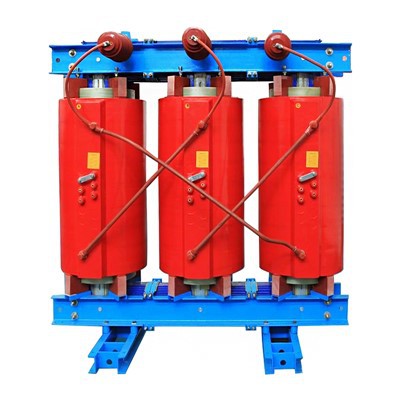
As a supplier of conventional power transformers, I’ve witnessed firsthand the critical role that impedance voltage plays in the performance of these essential electrical devices. In this blog post, I’ll delve into the concept of impedance voltage, explore how it impacts transformer performance, and discuss why it’s crucial for customers to consider this factor when purchasing power transformers. Conventional Power Transformer
Understanding Impedance Voltage
Before we dive into the impact of impedance voltage on transformer performance, let’s first understand what impedance voltage is. In simple terms, impedance voltage is the voltage drop across the transformer’s windings when rated current flows through them under short – circuit conditions. It is usually expressed as a percentage of the rated voltage of the transformer.
Mathematically, the impedance voltage ($U_{k}$) is calculated as:
$U_{k}=\frac{U_{sc}}{U_{n}}\times100%$
where $U_{sc}$ is the short – circuit voltage and $U_{n}$ is the rated voltage of the transformer.
The impedance voltage of a transformer is determined by its design, including the number of turns in the windings, the cross – sectional area of the conductors, and the magnetic properties of the core. Different types of transformers have different typical impedance voltage values. For example, distribution transformers usually have impedance voltages in the range of 4% – 10%, while large power transformers can have impedance voltages of 10% – 20% or even higher.
Impact on Short – Circuit Current Limitation
One of the most significant effects of impedance voltage on transformer performance is its role in limiting short – circuit currents. When a short – circuit occurs in the power system, a large amount of current can flow through the transformer. This high – current can cause overheating, mechanical stress, and potentially damage the transformer and other electrical equipment in the system.
The impedance of the transformer acts as a resistance to the flow of short – circuit current. A higher impedance voltage means a higher impedance in the transformer windings. According to Ohm’s law ($I = \frac{V}{Z}$), where $I$ is the current, $V$ is the voltage, and $Z$ is the impedance, a higher impedance ($Z$) will result in a lower short – circuit current ($I$) for a given voltage ($V$).
For example, consider two transformers with the same rated power but different impedance voltages. The transformer with a higher impedance voltage will limit the short – circuit current more effectively, reducing the stress on the transformer and other electrical components during a short – circuit event. This is crucial for the safety and reliability of the power system.
Influence on Load Voltage Regulation
Another important aspect affected by impedance voltage is load voltage regulation. Voltage regulation is a measure of how well a transformer can maintain a constant output voltage as the load on the transformer changes.
When a load is connected to the secondary side of a transformer, there is a voltage drop across the transformer’s internal impedance. The magnitude of this voltage drop depends on the impedance voltage of the transformer and the load current. Transformer with a lower impedance voltage will have a smaller voltage drop for a given load current, resulting in better voltage regulation.
Good voltage regulation is essential for many electrical loads, especially sensitive electronic equipment. If the output voltage of the transformer fluctuates too much with changes in load, it can cause malfunctions or damage to the connected equipment. For industrial applications, poor voltage regulation can also lead to reduced efficiency and increased operating costs.
Effects on Parallel Operation
In power systems, it is common to operate multiple transformers in parallel to increase the total power capacity and improve the reliability of the power supply. When transformers are operated in parallel, the impedance voltage plays a crucial role in ensuring proper load sharing among the transformers.
For parallel operation to be successful, the transformers should have similar impedance voltages. If the impedance voltages of the transformers are significantly different, the transformer with the lower impedance voltage will tend to carry a larger share of the load. This can lead to overloading of the low – impedance transformer and inefficient operation of the parallel – connected transformer bank.
To ensure proper load sharing, the difference in impedance voltage between parallel – connected transformers is typically limited to within a few percentage points. As a transformer supplier, we carefully match the impedance voltages of transformers that are intended for parallel operation to ensure optimal performance and reliability.
Considerations for Customers
When customers are in the market for a conventional power transformer, they should carefully consider the impedance voltage based on their specific application requirements. Here are some factors to keep in mind:
System Short – Circuit Level
If the power system has a high short – circuit level, a transformer with a higher impedance voltage may be required to limit the short – circuit current. However, a very high impedance voltage may also result in larger voltage drops under normal operating conditions. Therefore, a balance needs to be struck between short – circuit current limitation and voltage regulation.
Load Characteristics
For loads that are sensitive to voltage variations, such as data centers and semiconductor manufacturing facilities, transformers with lower impedance voltages are preferred to ensure good voltage regulation. On the other hand, industrial loads that can tolerate some voltage fluctuations may be able to use transformers with higher impedance voltages.
Parallel Operation
If the transformer is intended for parallel operation with other transformers, it is essential to ensure that the impedance voltage is compatible with the existing transformers in the system. Our technical support team can assist customers in selecting the appropriate transformer with the right impedance voltage for parallel operation.
Conclusion
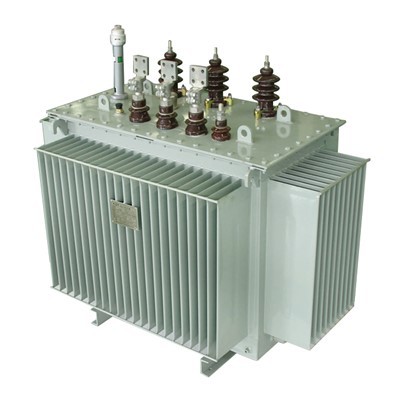
In conclusion, the impedance voltage of a conventional power transformer has a profound impact on its performance, including short – circuit current limitation, load voltage regulation, and parallel operation. As a supplier of conventional power transformers, we understand the importance of impedance voltage in meeting the diverse needs of our customers.
Conventional Power Transformer We offer a wide range of transformers with different impedance voltages to suit various applications. Our experienced engineers can work closely with customers to analyze their power system requirements and recommend the most suitable transformer solution. If you are in the market for a conventional power transformer or have any questions about impedance voltage and its impact on transformer performance, we encourage you to contact us. Let’s have a detailed discussion about your needs and how our transformers can help you achieve reliable and efficient power supply.
References
- Electrical Power Systems by C. L. Wadhwa
- Transformers: Principles, Applications, and Maintenance by A. P. Pillay
Nantong Yawei New Energy Technology Co., Ltd.
As one of the most professional conventional power transformer manufacturers and suppliers in China, we’re featured by quality products and good service. Please rest assured to wholesale durable conventional power transformer made in China here from our factory. Customized orders are welcome.
Address: Room 28-101, Building 27 and 28, No.333 Kaiyuan Avenue, Sunzhuang Subdistrict, Hai’an City, Nantong City, Jiangsu Province, China
E-mail: admin@nantongyawei.com
WebSite: https://www.nantongyawei.com/
