Is the C Class Ambient Light energy – efficient? C Class Ambient Light
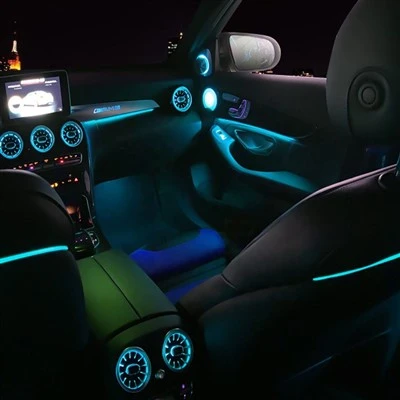
As a supplier of C Class Ambient Light, I’ve been asked this question countless times by potential customers, lighting designers, and industry enthusiasts. In this blog, I’ll dive deep into the topic to provide a comprehensive answer.
Understanding C Class Ambient Light
Before we assess its energy – efficiency, let’s first understand what C Class Ambient Light is. C Class Ambient Light is a type of lighting solution designed to create a soft, diffused, and inviting atmosphere in various settings. It is commonly used in commercial spaces such as hotels, restaurants, and offices, as well as in high – end residential areas.
The "C Class" designation often refers to a specific set of quality and performance standards. This includes factors like color rendering index (CRI), which measures how accurately a light source reveals the true colors of objects. A high – quality C Class Ambient Light typically has a CRI of 90 or above, ensuring that the colors in the illuminated space look vivid and natural.
The Energy – Efficiency of C Class Ambient Light
- LED Technology
Most C Class Ambient Lights on the market today are based on LED (Light – Emitting Diode) technology. LEDs are renowned for their energy – efficiency. They convert a significantly higher percentage of electrical energy into light compared to traditional incandescent or fluorescent bulbs.
Incandescent bulbs, for example, waste a large amount of energy in the form of heat. They typically convert only about 10% of the electrical energy into visible light, while the remaining 90% is dissipated as heat. In contrast, LEDs can convert up to 90% of the electrical energy into light. This means that for the same amount of light output, LEDs consume far less electricity.
When we talk about C Class Ambient Light, the LED – based ones can provide the same level of illumination as larger, less – efficient bulbs but with a fraction of the power consumption. For instance, a traditional incandescent bulb might need 60 watts to produce a certain level of ambient light, but an LED – based C Class Ambient Light could achieve the same effect with just 6 – 10 watts.
- Dimming Capabilities
Another key aspect of the energy – efficiency of C Class Ambient Light is its dimming capabilities. Most C Class Ambient Lights can be easily dimmed, allowing users to adjust the light intensity according to their needs.
In a commercial setting like a restaurant, during the day, when there is plenty of natural light, the ambient lights can be dimmed to a lower level. This reduces energy consumption without sacrificing the overall atmosphere. Similarly, in a hotel lobby, the lights can be dimmed during off – peak hours.
Dimming not only saves energy but also extends the lifespan of the LEDs. When LEDs are operated at a lower brightness level, they experience less stress, which can lead to a longer operational life. This reduces the frequency of bulb replacements, further contributing to cost savings and environmental friendliness.
- Long Lifespan
The long lifespan of C Class Ambient Light also plays a role in its energy – efficiency. LED – based C Class Ambient Lights can last anywhere from 25,000 to 50,000 hours or even more. In comparison, incandescent bulbs typically last only about 1,000 – 2,000 hours, and fluorescent bulbs last around 10,000 – 15,000 hours.
A longer lifespan means fewer replacements. Each time a bulb is replaced, there is an associated energy cost in the manufacturing, transportation, and disposal processes. By reducing the number of replacements, C Class Ambient Light helps to conserve energy throughout its life cycle.
Comparing with Other Lighting Options
- Halogen Lights
Halogen lights are often used for ambient lighting purposes as well. However, they are much less energy – efficient compared to C Class Ambient Light. Halogen bulbs work by passing an electric current through a tungsten filament, much like incandescent bulbs. They produce a lot of heat, which is a sign of energy wastage.
A halogen bulb might need 30 – 50% more energy than an equivalent LED – based C Class Ambient Light to produce the same amount of light. Additionally, halogen bulbs have a shorter lifespan, typically around 2,000 – 4,000 hours.
- Fluorescent Lights
Fluorescent lights are more energy – efficient than incandescent and halogen bulbs, but still not as efficient as C Class Ambient Light. Fluorescent lights work by passing an electric current through a gas – filled tube, which then produces ultraviolet light that is converted into visible light by a phosphor coating on the inside of the tube.
While they consume less energy than traditional bulbs, fluorescent lights have some drawbacks. They contain small amounts of mercury, which is a toxic substance. Disposal of fluorescent bulbs requires special handling to prevent environmental contamination. Moreover, fluorescent lights may take some time to reach full brightness and may flicker, which can be a nuisance in some settings. In comparison, C Class Ambient Light provides instant full – brightness illumination and is mercury – free.
Real – World Examples of Energy Savings
Let’s look at some real – world scenarios to illustrate the energy – savings potential of C Class Ambient Light.
Suppose a restaurant has 50 traditional incandescent bulbs for ambient lighting, each consuming 60 watts. If they are replaced with LED – based C Class Ambient Lights that consume 10 watts each, the total power consumption for the ambient lighting will drop from 3,000 watts (50 * 60) to 500 watts (50 * 10).
Assuming the lights are on for 10 hours a day, 300 days a year, the annual energy consumption will be reduced from 90,000 kilowatt – hours (3,000 watts * 10 hours * 300 days / 1000) to 15,000 kilowatt – hours (500 watts * 10 hours * 300 days / 1000). This represents a significant energy savings of 75,000 kilowatt – hours per year.
Conclusion: C Class Ambient Light is Energy – Efficient
In conclusion, C Class Ambient Light is indeed energy – efficient. Thanks to its LED technology, dimming capabilities, and long lifespan, it offers a cost – effective and environmentally friendly lighting solution. Whether you are a business owner looking to reduce your energy bills or a homeowner seeking a more sustainable lighting option, C Class Ambient Light is a great choice.
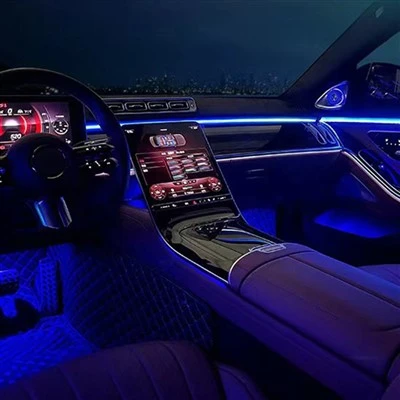
If you are interested in learning more about our C Class Ambient Light products or are considering a purchase for your next project, I encourage you to reach out to us for a detailed discussion. We can provide you with samples, technical specifications, and a customized lighting plan to meet your specific needs.
E Class Ambient Light References
- Epelbaum, Y., & Perelman, L. (2019). LED Lighting Handbook. CRC Press.
- Zukauskas, A., Shur, M. S., & Gaska, R. (2002). Introduction to Solid – State Lighting. Wiley – Interscience.
Guangzhou Yuka Technology Co., Ltd.
As one of the most professional c class ambient light manufacturers in China, we’re featured by quality products and good price. We warmly welcome you to buy advanced c class ambient light made in China here from our factory. If you have any enquiry about quotation, please feel free to email us.
Address: 2nd Floor, No.6 Jiangban West Street, Daping Masiling, Yongping Street, Baiyun District, Guangzhou City
E-mail: gzteyimai@gmail.com
WebSite: https://www.gzyuka.com/
