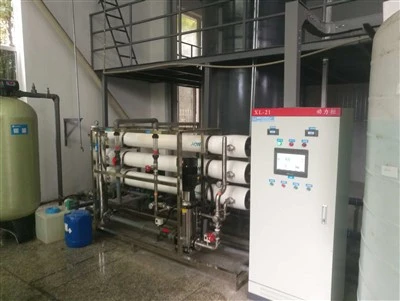
Hey there! I’m a supplier of EDI Pure Water Systems, and I’ve been getting a bunch of questions lately about how to remove hardness from water before it enters an EDI system. So, I thought I’d put together this blog post to share some tips and tricks on this topic. EDI Pure Water System
What is Water Hardness Anyway?
First things first, let’s talk about what water hardness means. Water hardness is basically the amount of dissolved minerals in water, mainly calcium and magnesium. When these minerals are present in high concentrations, the water is considered "hard." You can usually tell if you have hard water if you notice a white, chalky residue on your dishes, faucets, or showerheads. Hard water can also make it harder to get soap to lather up and can leave your skin feeling dry and itchy.
Why is it Important to Remove Hardness Before an EDI System?
EDI (Electrodeionization) Pure Water Systems are designed to produce high – purity water. But hard water can cause some serious problems for these systems. The calcium and magnesium ions in hard water can form scale on the membranes and other components of the EDI system. This scale buildup can reduce the efficiency of the system, increase energy consumption, and even lead to premature failure of the equipment. So, it’s super important to remove the hardness from the water before it goes into the EDI system.
Methods to Remove Water Hardness
Now, let’s get into the different methods you can use to remove hardness from water.
Ion Exchange
One of the most common methods is ion exchange. In an ion – exchange system, the hard water passes through a resin bed. The resin is filled with sodium ions. When the calcium and magnesium ions in the hard water come into contact with the resin, they swap places with the sodium ions. This process effectively removes the calcium and magnesium from the water, making it "soft."
The great thing about ion – exchange systems is that they’re relatively simple and reliable. They can be easily sized to fit the needs of your EDI system. However, they do require regular regeneration. During regeneration, a brine solution is passed through the resin bed to replace the sodium ions that have been used up. This process can be a bit messy and requires the use of salt.
Reverse Osmosis (RO)
Reverse osmosis is another popular method for removing water hardness. In an RO system, the water is forced through a semi – permeable membrane under pressure. The membrane allows water molecules to pass through but blocks larger molecules like calcium and magnesium ions.
RO systems are very effective at removing hardness, as well as other contaminants like bacteria, viruses, and heavy metals. They don’t require the use of chemicals for regeneration like ion – exchange systems do. However, RO systems can be a bit more expensive to install and operate. They also waste a certain amount of water during the filtration process.
Lime Softening
Lime softening is an older method that involves adding lime (calcium hydroxide) to the hard water. The lime reacts with the calcium and magnesium bicarbonates in the water to form insoluble precipitates. These precipitates can then be removed from the water by sedimentation or filtration.
Lime softening is a cost – effective method for large – scale water treatment. But it requires careful control of the chemical dosing to ensure that the right amount of lime is added. It also produces a large amount of sludge that needs to be disposed of properly.
Factors to Consider When Choosing a Hardness Removal Method
When deciding which method to use for removing water hardness before your EDI system, there are a few factors you need to consider.
Water Quality
The quality of your source water is a major factor. If your water has a very high hardness level, you might need a more aggressive treatment method like RO. On the other hand, if the hardness is only moderately high, an ion – exchange system might be sufficient.
Flow Rate
The flow rate of your water is also important. If you have a high – flow application, you’ll need a treatment system that can handle that volume of water without getting overloaded. Some systems, like ion – exchange systems, have a limited capacity and might need to be sized up or multiple units installed for high – flow applications.
Budget
Your budget is obviously a consideration. RO systems tend to be more expensive upfront and have higher operating costs, while ion – exchange systems are generally more affordable. However, you also need to think about the long – term costs, including maintenance and replacement parts.
How We Can Help
As a supplier of EDI Pure Water Systems, I’ve seen firsthand how important it is to have the right water pre – treatment in place. We have a team of experts who can help you analyze your water quality and determine the best method for removing hardness from your water.
We can provide you with high – quality ion – exchange systems, RO systems, and all the necessary components for your water pre – treatment setup. Our systems are designed to be reliable, efficient, and easy to maintain. Whether you’re a small business or a large industrial facility, we have a solution that will fit your needs.
If you’re having any issues with water hardness or are just looking to improve the performance of your EDI system, don’t hesitate to reach out. We’re here to answer your questions, provide you with a free consultation, and help you find the right water treatment solution for your situation.

In conclusion, removing hardness from water before it enters an EDI Pure Water System is crucial for the proper functioning and longevity of the system. There are several methods available, each with its own pros and cons. By considering factors like water quality, flow rate, and budget, you can choose the method that’s right for you. And if you need any help along the way, we’re just a call or an email away.
References
- AWWA (American Water Works Association). Water Quality and Treatment: A Handbook of Community Water Supply.
- Lee, S. H. (Ed.). Water Treatment Defluoridation and Hardness Removal.
Deionized Water System That’s all for today! I hope this blog post has been helpful. If you have any more questions or want to start a conversation about your EDI system and water pre – treatment, feel free to get in touch.
Shenzhen Jkon Environmental Protection Technology Co., Ltd.
As one of the most professional edi pure water system manufacturers and suppliers in China, we’re featured by quality products and good service. Please rest assured to buy customized edi pure water system made in China here from our factory. Contact us for more details.
Address: Shanghenglang Industrial park, Daloang Street, Longhua District, Shenzhen, China
E-mail: sales@jkontech.com
WebSite: https://www.jkontech.com/
