If you’ve ever stood in a biotech lab at 2 a.m., watching a shaker incubator hum and a plate reader spit out its 47th replicate for a residual protein assay, you know this: high-throughput isn’t just a buzzword—it’s the difference between getting a drug to patients in five years and a decade. For years, that idea felt at odds with host cell residual protein (HCP) testing, a step that’s non-negotiable for biologic safety but has long been bogged down by manual workflows and slow, labor-heavy tests. As a supplier who’s talked to lab managers, process development scientists, and regulatory specialists a hundred times over the past seven years, let me cut through the noise: yes, HCP detection kits absolutely belong in high-throughput workflows—if you pick the right ones, and use them right. Host Cell Residual Protein Detection Kits

I didn’t always think that. Early in my career, I worked at a small biotech that was rushing to scale a monoclonal antibody, and we grabbed a HCP kit just because it was the one our CRO recommended. Back then, we ran 96-well plates on our BioTek plate reader, but each plate took four hours to process manually: 30 minutes to aliquot samples, two hours of incubation at 37°C, 45 minutes of washing, 30 minutes of adding detection antibody, and another hour of incubation before reading. For a process development run that needed 10 samples, that meant 10 plates, 40 hours of hands-on time, and a three-day turnaround for results that were inconsistent—some wells had bubbles that skewed readings, some aliquots had tiny volume differences that threw off the standard curve. We missed a critical impurity spike because we couldn’t run a second replicate in time to adjust our fermentation parameters. That failure wasn’t the kit’s fault, exactly—it was our fault for not realizing that most legacy HCP kits were built for small, low-throughput use cases, not the 1,536-well plates, automated liquid handlers, and 24-hour process monitoring that modern bioproduction demands.
Fast forward to today, and I’ve seen how this changed for good. The HCP assay space has matured, with new kits designed specifically for high-throughput applications, and I’ve watched dozens of our customers (from antibody developers to gene therapy manufacturers) move their HCP testing from a bottleneck at the end of purification to an integrated step in upstream and downstream process monitoring. Let’s break down the hard truths about high-throughput HCP testing, the myths that still circulate, and why your next HCP kit could be the thing that cuts your timeline by weeks, not hours.
First, let’s address the biggest myth: HCP testing is only for final drug substance, so why scale it? That’s a myth that died five years ago, thanks to the rise of continuous bioprocessing and PAT (Process Analytical Technology) initiatives from the FDA and EMA. If you’re running a fed-batch fermentation for 14 days, you need to test HCP levels at days 3, 7, 10, and 13 to catch contamination early—before it impacts your yield or product quality. If you’re running 10 bioreactors in parallel (the new standard for mid-scale manufacturing), that’s 40 samples per batch, multiplied by three batches a week, and suddenly you’re looking at 120 samples a week. Running those on a legacy kit would mean hiring two full-time people just to do assays, which is impossible for small and mid-sized biotechs with tight budgets. High-throughput HCP kits cut that time by 70% or more because they’re compatible with automated workflows: liquid handlers like Hamilton or Tecan can aliquot samples and reagents directly into 96-well or 384-well plates, no manual pipetting needed. Our top-selling high-throughput HCP kit, for example, has a protocol that’s optimized for the Biomek i7, a workhorse in 80% of biotech labs, so you don’t have to waste time writing custom scripts.
But here’s the catch: not all high-throughput HCP kits are created equal. I’ve had a customer a few months back come to me frustrated, saying their new kit “gave results that were 2x higher than their old kit, and the standard curve was all over the place.” When we dug into it, we found they’d picked a generic pan-HCP kit that used antibodies from a different host cell line—wait, that’s a huge red flag. If you’re making a CHO-derived mAb, your HCP is all the leftover proteins from Chinese Hamster Ovary cells, so you need a kit that uses anti-CHO HCP antibodies, not a cross-reactive one that picks up proteins from E. coli or yeast. Generic kits might work for small-scale testing, but in high-throughput, where you’re comparing dozens of samples over weeks, you need a kit with validated cross-reactivity to your specific host. Our kits all come with a 100% species match for CHO, E. coli, and insect cells, and we provide a certificate of validity for each lot—something most generic high-throughput kits skip. That customer switched to our kit, and within two weeks they’d integrated HCP testing into their upstream process monitoring, cutting their turnaround time for fermentation adjustments from 72 hours to 8 hours.
Another common pain point for high-throughput HCP testing is assay precision. When you run manual assays, even small differences in incubation time or washing can lead to CVs (coefficients of variation) of 10-15%, which is acceptable for final testing, but for process monitoring, you need CVs under 5% to spot real trends vs. noise. That’s where modern high-throughput HCP kits come in. They use homogeneous assay formats (like time-resolved fluorescence resonance energy transfer, or TR-FRET) instead of the traditional sandwich ELISA, which requires multiple washing steps. TR-FRET assays don’t need washing, so you eliminate 40% of the manual steps, and CVs drop to 3-4%, even in 384-well plates. I remember a customer at a gene therapy firm that was running 10 1,536-well plates a week for AAV vector HCP testing—they were using a manual TR-FRET kit and had a CV of 12%, which made it impossible to tell if a small HCP spike was real or a lab error. When they switched to our automated-compatible TR-FRET HCP kit, their CV dropped to 3.2%, and they were able to catch a rare HCP isoform that was reducing their vector potency by 18%—something they’d missed for six months with their old setup.
Wait, but what about regulatory compliance? That’s the second biggest question I get, right after “can this handle my 1,536-well plates?” The FDA doesn’t care if you run your HCP test in 96-well or 1,536-well plates—they care that your assay is validated, your results are accurate, and you can trace every step. The USP <1029> and ICH Q2(R1) guidelines for residual protein testing apply equally to high-throughput and low-throughput kits, so long as the high-throughput kit is validated per those guidelines. Our kits go through full 21 CFR Part 11 compliance testing, which means all data is electronic, audit trails are built-in, and you can integrate the assay directly with your LIMS (Laboratory Information Management System) without manual data entry. For big pharma customers, this is non-negotiable: a major mAb manufacturer I work with runs 2,000 HCP samples a month for their commercial process, and they switched to our high-throughput kit last year. They told me that before, their HCP testing was the only step that required manual data transfer, which led to three regulatory audit findings over two years. Now, the entire workflow is automated, and auditors have given them no findings related to HCP testing in their last three audits. That’s a huge win—no one wants to delay a drug launch because of a data transfer error.
Now, let’s talk about the limits. I don’t want to oversell this, because no kit is perfect for every use case. If you’re running a single 96-well plate once a month for an academic lab, a low-throughput kit is cheaper and simpler. If your HCP levels are extremely low (like <1 ng/mL in final drug substance), you might need a more sensitive assay that’s not optimized for 1,536-well plates yet. But for 90% of process development and mid-to-large scale bioproduction workflows, high-throughput HCP kits are not only feasible—they’re essential. I’ve seen small biotechs that used to take six months to scale a mAb cut that timeline to two months just by automating HCP testing. I’ve seen gene therapy firms increase their vector yield by 25% by adjusting their purification process in real time, thanks to frequent, reliable HCP data from high-throughput kits.
Let’s also address a question I get all the time: is high-throughput testing worth the investment? At first glance, a high-throughput kit might cost 20% more per well than a legacy kit. But when you calculate the total cost of ownership, it’s a no-brainer. Let’s do the math: a small biotech running 100 HCP samples a month, with two FTEs spending 10 hours a week on manual assays. Each FTE makes $80,000 a year, so that’s $160,000 a year in labor, plus $20,000 a year in kit costs. If they switch to a high-throughput kit, they eliminate those two FTE hours a week (they now have a single tech spending 2 hours a week on assay setup, because the rest is automated), cutting labor costs by $120,000 a year. Kit costs go up to $30,000 a year, so total savings are $90,000 a year. That’s money they can put into process development, R&D, or getting their drug to patients faster. For big pharma, the numbers are even more dramatic: a single delay in a clinical trial can cost $100,000 a day, so cutting even a week off timelines is worth millions.
I know this from experience, because I’ve been on both sides. I was a process development scientist before I started this company, so I’ve felt the pressure of missed deadlines, the frustration of inconsistent results, and the panic when a late assay makes you miss a bioreactor harvest. That’s why when we designed our high-throughput HCP kits, we didn’t just engineer a kit that works in a plate reader—we worked directly with process development scientists, regulatory specialists, and lab managers to build something that solves real problems. We offer free method development support for every customer, no hidden fees, because we know that switching to a new assay is a hassle, and we want to make it easy. We also run quarterly webinars on integrating high-throughput HCP testing into continuous bioprocessing and PAT workflows, so teams can learn from each other’s experiences.
At the end of the day, HCP testing’s job is simple: keep patients safe by making sure your drug doesn’t have leftover host cell proteins that could cause an immune reaction, and keep your process on track by catching impurities early. High-throughput testing doesn’t change that core goal—it just makes it easier, faster, and more reliable. The question isn’t whether high-throughput HCP kits can be used in high-throughput testing—it’s why you’re still using a manual kit if you’re processing more than 50 samples a week.
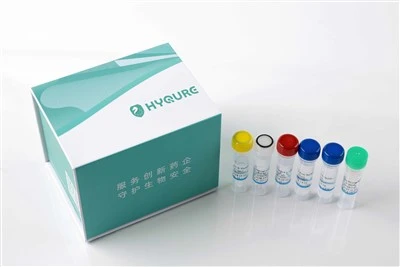
If you’re tired of manual assays that take days, give inconsistent results, and hold up your process, let’s talk. We can walk through your sample type, your host cell line, and your throughput needs, and show you how our high-throughput HCP kits can cut your time and cost while keeping you compliant with regulatory guidelines. No sales pitches, no fine print—just real solutions for real lab problems.
Host Cell Residual Protein Detection Kits References
- International Council for Harmonisation of Technical Requirements for Pharmaceuticals for Human Use. ICH Q2(R1): Validation of Analytical Procedures: Text and Methodology; 2005.
- U.S. Pharmacopeia. <1029> Residual Host Cell Proteins in Biologic Products; 2020.
- Food and Drug Administration. Process Analytical Technology (PAT): A Framework for Innovative Pharmaceutical Development, Manufacturing, and Quality Assurance; 2004.
- Lee K, et al. High-throughput host cell residual protein detection for continuous bioprocessing. Biotechnol Bioeng. 2021;118(7):2542-2553.
- Zhang Y, et al. Comparison of sandwich ELISA and TR-FRET assays for low-level host cell protein detection in biopharmaceuticals. J Pharm Biomed Anal. 2019;173:112689.
HyQure Biotech Co., Ltd.
As a professional host cell residual protein detection kits enterprise in China and Switzerland, we rely on international compliance standards, leverages excellent quality and technical strength. If you have any enquiry about cooperation, please feel free to email us.
Address: Building 18, Lane 2777 East Jinxiu Road, Pudong New Area, Shanghai 2.Stücki Park Hochbergerstr. 60 I, 4057 Basel Switzerland
E-mail: service@hyqure.com
WebSite: https://www.hyqure.com/
