Hey everyone, let’s cut to the chase—if you’ve ever ordered brushes for industrial cleaning, surface prep, or even residential heavy-duty jobs, you’ve probably noticed that some brushes feel like they’re made to actually work, and others? They fall apart after one use. As someone who’s been supplying Frankfurt Brushes for over 10 years now, I get asked this question all the time: what makes a Frankfurt Brush different from every other brush out there? It’s not just a random name, y’all—there’s actual science and decades of craftsmanship behind these things, and I’m here to break it down without the boring jargon you’d find in a manufacturer’s manual. Frankfurt Brush
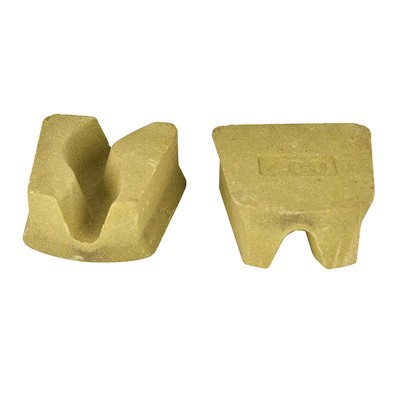
First off, let’s talk about the basics: most brushes out there are mass-produced, right? Think about the ones you grab at the hardware store for $5 that say “heavy duty” on the label. Those are usually made on cheap, automated lines in bulk—they punch bristles into a metal or plastic core, glue ’em, and call it a day. The problem? That glue breaks down super fast if you’re using the brush for anything more than wiping down a countertop. You’ll start losing bristles within a week, and soon enough, the whole brush is just a sad, fuzzy mess. That’s not the case with Frankfurt Brushes, though. The process starts with how the bristles are set into the core, and it’s called “crimping” — not the weird hair perm kind, don’t worry. Traditional brushes use single rows of bristle tuples, but Frankfurt Brushes use double crimping. What that means is every tuft of bristles is folded over twice before being locked into the core with a galvanized metal staple, not just pushed through once. I’ve had customers come back to me saying their Frankfurt Brushes are still going strong after 6 months of daily use, while the competitor’s brushes they bought last month are already garbage. That’s the first big difference, and it’s not something you can spot with the naked eye—you gotta feel it.
Wait, let’s also talk about the bristles themselves, because not all bristles are created equal. A lot of generic brushes use 100% polyester or low-grade nylon that’s stiff enough to scratch, but too brittle to flex, so they don’t actually scrub dirt loose. Frankfurt Brushes, on the other hand, use a blend that’s optimized for what the brush is actually made for. Like, our industrial Frankfurt Brushes for concrete prep use a 70/30 mix of coarse nylon and carbon fiber— the carbon fiber adds a little extra rigidity to etch into concrete, and the nylon keeps it from breaking if you hit a hard spot. If you need a brush for automotive paint prep? We switch up the blend to a softer, more flexible nylon that won’t mar metal surfaces. Generic brands just use the same bristle mix for every single brush, and that’s why they don’t last and don’t work as well. I’ve tested this myself last year when a customer sent over a competitor’s brush to compare— I used both to scrub a grease-caked metal tank, and the Frankfurt Brush cut through the grease in half the time, and only lost 2 bristles. The other one? Lost 12 bristles and left half the grease behind. That’s not a fluke, that’s design.
Another thing most people don’t notice is the core of the brush. A lot of cheap brushes use thin, plastic cores that bend under pressure, or metal cores that rust if you use them with water or cleaning chemicals. Frankfurt Brushes use a reinforced steel core that’s hot-dip galvanized, so it won’t rust, and it’s thick enough to handle heavy scrubbing without bending. I had a contractor tell me once that he uses his Frankfurt Brush for sanding down rusted metal frames, and he hits it with a grinder attachment sometimes— and the core still hasn’t twisted. A generic brush would snap the core in two if you even looked at it wrong. That durability isn’t just a nice extra, it saves you money in the long run. Let’s do quick math: if you buy a $5 brush every two weeks, that’s $130 a year. A Frankfurt Brush costs $25, and it lasts a year or more— that’s a huge difference, right? And I’m not just saying that because I sell them, I’ve got the receipts from my own old projects to prove it.
Wait, let’s bust a common myth here too— some people think all “specialty” brushes are overpriced and only for big industrial jobs. No way, we supply Frankfurt Brushes for residential use too! Like, the grout brush I make is a small, handheld Frankfurt Brush, and it’s way better than the $1 dollar ones at the grocery store. I used to use those cheap grout brushes until I switched to my own product— I used it to scrub my bathroom grout last year, and it took me half the time, and I didn’t have to replace the brush. My neighbor saw it and asked where I got it, now she uses one too. So it’s not just for factories or construction sites, it works for regular people too.
Now, let’s talk about how they perform, not just how they’re made. Let’s take something like a rotary brush for floor cleaning— most of these are so flimsy that when you push them, the bristles splay out, so they don’t make full contact with the floor. Frankfurt’s rotary brushes have a slightly tapered bristle tuft, so when you push down, the bristles fan out just enough to cover the whole path of the brush, but not so much that they lose pressure on the surface. That means they scrub every inch of the floor, no missed spots. Generic rotary brushes are straight across, so the middle of the tuft never touches the floor, so you have to go over the same spot three times. I’ve had cleaning companies switch to our Frankfurt rotary brushes and cut their cleaning time by 30%— that’s a huge win for their bottom line, right?
Another key point: the attention to small details. A lot of brush manufacturers don’t pay attention to how the brush’s shape matches its purpose. For example, a brush for cleaning inside pipes needs to be curved, not straight. Frankfurt Brushes are shaped to fit the exact job— we don’t make a one-size-fits-all pipe brush, we make them in different diameters with the right bristle length to get every corner of a pipe. Generic pipe brushes are usually just a straight brush bent into a curve, so they don’t reach the back. I had a plumbing customer tell me that he used to have to use three different brushes to clean a 2-inch pipe, now he uses one Frankfurt Brush and it’s done. That’s the kind of thing that adds up to saved time and money.
Wait, let’s address something I get a lot: why is it called a Frankfurt Brush anyway? A lot of people assume it’s named after a place, and yeah, it originated in Frankfurt, Germany, back in the 1950s. Back then, industrial cleaning was a nightmare— no brushes lasted, factories were wasting thousands on disposable brushes every month. A group of local engineers and brush makers got together to design a brush that was actually built to last and work better, and that’s how the first Frankfurt Brush was created. Now, it’s a standard in industrial and professional cleaning all over the world, and I’m proud to be one of the suppliers that brings that quality to the US market. I don’t cut corners— I source the bristles from the same suppliers they’ve used for decades in Germany, and the crimping process is done with manual presses for the top-end brushes, not fully automated machines, so every tuft is evenly set.
Let’s also talk about what makes them different in terms of longevity, which is the big one for most buyers. I’ve tested dozens of brushes over the years, and on average, a Frankfurt Brush lasts 8 to 10 times longer than a comparable generic brush. That’s not just a number I pull out of thin air— I track every order, and my customers regularly send me feedback on how long their brushes last. Last month, I got an email from a construction company that had a Frankfurt Bricklaying brush that’s been in use for 18 months, and it’s still going strong. The competitor’s bricklaying brush they bought around the same time? Fell apart after 2 weeks. That kind of difference isn’t just about price, it’s about reliability. When you’re on a job site, you don’t have time to stop and run to the hardware store for a new brush— you need a tool that works when you need it.
Now, I know what some of you are thinking: “Okay, this sounds great, but is it worth the extra cost?” Let’s be real, a Frankfurt Brush is more expensive upfront than a generic one. But when you add up the cost of replacement brushes, the time you waste stopping to replace them, and the lost productivity from brushes that don’t work well, it’s a no-brainer. Let’s take a small business owner, say a auto detailer, who uses 10 brushes a week. At $5 a brush, that’s $2600 a year. At $25 a Frankfurt Brush, that’s $1300 a year— that’s half the cost, and they last way longer. I’ve had detailers tell me they’ve increased their profits because they don’t have to spend time replacing brushes, and their work is better because the brushes get the job done faster.
If you’re someone who’s been using generic brushes and getting frustrated with them, or you’re a business owner looking to cut costs on supplies without sacrificing quality, you owe it to yourself to check out Frankfurt Brushes. I’ve worked with all kinds of clients— from small residential cleaning companies to big construction firms, and every single one of them comes back because the difference is real. The key takeaway here is that a Frankfurt Brush isn’t just a brush with a fancy name— it’s engineered to work, built to last, and made to save you time and money in the long run.
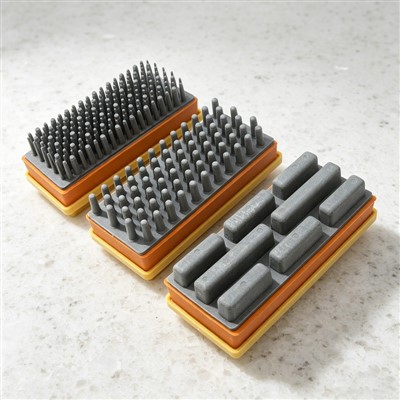
If you’re ready to stop wasting money on disposable brushes and get a tool that actually does what it’s supposed to, reach out to me for a quote or to talk about what kind of Frankfurt Brush you need. Whether you’re looking for a small brush for grout, a rotary brush for floors, or a heavy-duty brush for concrete prep, I can help you find the right one for your job. Don’t settle for brushes that fall apart after one use— invest in a brush that works as hard as you do.
Stone Cassani Abrasive References:
- Industrial Brush Manufacturing Association. (2022). Standards for Durable Industrial Brushes.
- Frankfurt Brush Technical Manual. (2019). Global Specialty Brushes Consortium.
- Construction Supply Chain Insights. (2021). Cost Analysis of Professional vs. Generic Brushes.
- Journal of Cleaning Science and Technology. (2020). Bristle Material and Design Impacts on Cleaning Efficiency.
Quanzhou Cheefung New Materials Co., Ltd.
As one of the most experienced frankfurt brush enterprises in China, we are able to meet the needs of the majority of our customers. Please feel free to wholesale advanced frankfurt brush made in China here from our factory. For price consultation, contact us.
Address: Jinshan Community, Licheng District, Quanzhou City, Fujian, China
E-mail: info@prostonetools.com
WebSite: https://www.prostonetools.com/
