If you’ve ever shopped for inserts—whether for CNC machining, molding, or another industrial application—you know the balance between cost and performance is a tightrope walk. As someone who’s run an insert supplier for over a decade, I’ve watched way too many shops slash budgets by cutting corners on inserts, only to deal with shortened tool life, poor part quality, and frequent production delays that end up costing them way more in the long run. But here’s the good news: you don’t have to sacrifice performance to lower insert costs. It’s not about buying the cheapest part you can find—it’s about making smart, data-driven choices that stretch your insert dollar without hurting your output. Inserts
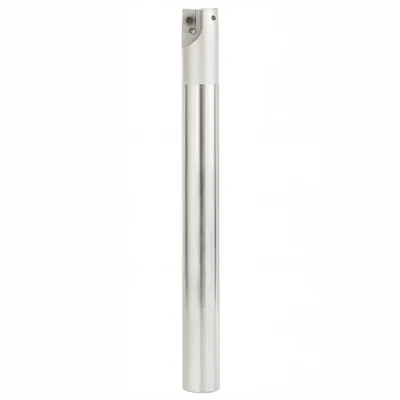
Let’s start with the biggest mistake I see: buying inserts purely by price per piece, without factoring in how long they last or how many parts they can produce. A customer once told me they’d switched to a 10% cheaper insert for their aluminum machining job, only to find the new insert wore out after 25 parts, compared to the old one that did 50 parts. Over a month, that 10% cheaper insert cost them twice as much per part. That’s the hidden cost of low-cost inserts: not just the purchase price, but the labor to change tools, the downtime for machine setup, and the scrap parts from uneven cuts. So step one: calculate cost per part, not just cost per insert. The formula’s simple: total insert cost divided by number of parts the insert produces. If a $2 insert does 50 parts, that’s $0.04 per part. A $1.80 insert that does 20 parts is $0.09 per part—way more expensive. I’ve worked with customers who re-ran these numbers and found they could afford a 15% more premium insert and still cut their per-part insert cost by 30%. It sounds counterintuitive, but that’s the math that matters.
Next, right-sizing the insert for your application. Too many shops use a “one insert fits all” approach, which is a waste. Let’s take carbide inserts, for example. If you’re machining soft, non-ferrous metals like aluminum, a fine-grain carbide insert isn’t necessary—coarse-grain carbide is tougher and cheaper, and it will hold up just fine for that job. Use fine-grain only for hard materials like titanium or hardened steel, where the extra wear resistance pays off. Similarly, insert geometry matters. A round insert works great for facing, but for shoulder milling, a square insert with a larger cutting edge will remove more material per pass, reducing the number of times you have to change the insert. I had a customer making automotive engine components who was using a triangular insert for their shoulder milling operation. Switching to a square insert let them double their material removal rate, cut insert changes in half, and lower their insert cost per part by 22%—all without changing their machine or cutting parameters. The key here is to match the insert’s grade and geometry exactly to your material and operation, not to the most versatile insert in the catalog.
Then there’s the often-overlooked practice of reconditioning or regrinding inserts. A lot of people think once an insert has a broken cutting edge or minor wear, it’s trash. But for many applications, especially roughing operations, you can regrind the worn edge to create a new cutting surface. At my company, we offer reconditioning services for used inserts that can bring them back to like-new performance at 40-50% of the cost of a new insert. I know a precision machining shop that reconditions every roughing insert they use—they cut their insert costs by 40% in a year, and they only run into issues on hard finishing jobs where regrinding would affect insert geometry too much. It’s not for every operation, but if you’re doing high-volume roughing, reconditioning is a game-changer. Just make sure you’re working with a supplier that does proper quality control—bad regrinding can lead to inconsistent cuts and scrap parts.
Another way to cut costs without sacrificing performance is to optimize your cutting parameters. This is something I talk about all the time with my customers, and it’s free to implement. A lot of shops run inserts at conservative speeds and feeds out of habit, but that’s not always necessary. Test slightly higher speeds and feeds for your insert and material—sometimes you can increase your material removal rate by 10-15%, which means fewer inserts needed. Of course, you have to do this carefully—too high and you’ll get premature wear or breakage. The sweet spot is where your insert is working at maximum efficiency without failing prematurely. I once worked with a job shop that was running their milling inserts at 800 SFM for steel. After testing, they bumped it to 950 SFM, kept the same feed rate, and found each insert produced 15% more parts, cutting their insert usage by the same amount. Just make sure you have a way to monitor insert wear—something as simple as a visual check after every 10 parts can help you catch when you’re pushing too far and adjust before you get scrap.
Bulk ordering makes sense, but only if you use what you buy. I’ve had customers stock up on inserts when they see a price break, only to find their product line changed a year later and half the inserts are obsolete. That’s a huge waste. Instead, work with a supplier to order the right amount on a regular schedule, based on your actual usage. Most suppliers offer volume discounts for repeat orders, so you still get the benefit of lower pricing without tying up cash in obsolete inventory. We also let customers hold excess stock at our facility if they need a larger quantity, so they don’t have to store it themselves, and they can place smaller, frequent orders at a discount. It’s a win-win—you don’t have excess inventory, and you get lower pricing than buying single pieces.
Finally, partner with a supplier who will work with you, not just sell you inserts. A lot of small shops get stuck with one-size-fits-all catalog inserts, but a good insert supplier will help you test different grades and geometries for your specific application. We do free sample inserts for customers who want to test, so they can see for themselves how a different insert works for their job. One customer came to us with a problem: their inserts were wearing too fast on their stainless steel turning operation, and they were paying a premium for a specialty grade. We tested three different mid-grade inserts, and found one that worked just as well, lasted almost as long, and cost 25% less. They’ve been using that insert for three years now, and their insert costs are down significantly. The right supplier doesn’t just take your order—they help you solve problems that lower your overall costs.
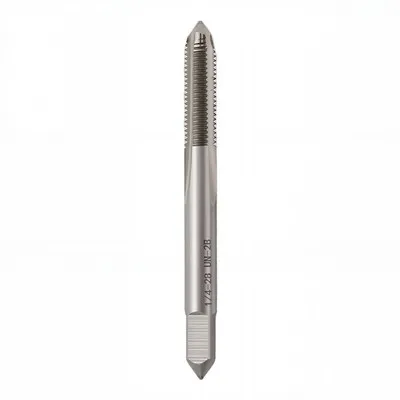
Let’s wrap this up: reducing insert costs doesn’t mean cutting performance. It means ditching the price-per-piece mindset, right-sizing inserts for your job, using reconditioning where it makes sense, optimizing cutting parameters, ordering smart, and working with a supplier who has your back. Every one of these steps adds up to lower costs, fewer delays, and better parts. If you’re ready to reevaluate your insert strategy and find ways to save without sacrificing quality, reach out to our team to discuss your specific operation. We’ll help you figure out exactly what works for your needs.
Drill Bits References
ASM International. (2019). Carbide Insert Grades and Applications. Materials Park, OH: ASM International.
Machinery’s Handbook. (2021). Cutting Tools and Insert Performance. Industrial Press.
NOMMA (National Machine Tool Builders Association). (2020). Cost Optimization in Machining Operations. NOMMA Publications.
Small Craftsman (Shandong) Machine & Tools Co., Ltd.
Small Craftsman (Shandong) Machine & Tools Co., Ltd. is one of the most experienced inserts manufacturers and suppliers in China, also supports customized service with low price. Please feel free to buy bulk high quality inserts in stock here from our factory. Contact us for pricelist.
Address: No.9 Quanxin Rd., Sishui Economic Developing Zone, Jining, Shandong, China.
E-mail: 6196@ocutchina.com
WebSite: https://www.ocutooling.com/
