If you’ve ever worked in industries like construction, agriculture, or manufacturing, chances are you’ve relied on hydraulic pumps to keep equipment moving. As a hydraulic parts supplier, I’ve seen first-hand how a single pump failure can grind a project to a halt, cost thousands in downtime, and even damage other critical system components. Over 15 years in this business, I’ve worked with hundreds of clients to troubleshoot pump issues, and I’ve learned that most failures aren’t random—they stem from avoidable issues with installation, maintenance, or operation. Let’s break down the most common hydraulic pump failures, what causes them, and how you can spot them before they become costly problems. Hydraulic Parts
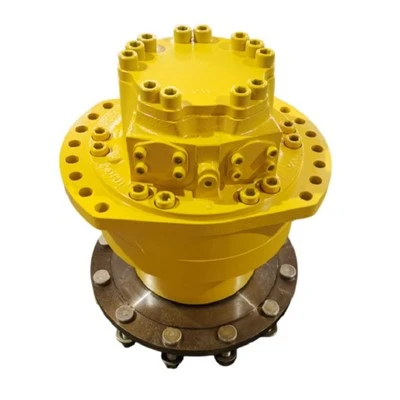
First, and arguably the most frequent failure I encounter, is internal leakage. Unlike external leaks, which are easy to spot with visible fluid puddles, internal leakage goes unnoticed until performance drops. Hydraulic pumps rely on tight clearances between internal parts—like the gear teeth in a gear pump, the vanes in a vane pump, or the pistons in a piston pump—to build pressure. Over time, wear on these parts creates larger gaps, so hydraulic fluid slips backward from the high-pressure outlet to the low-pressure inlet instead of pushing through the system. What does that look like in practice? A excavator that can’t lift its arm all the way, a forklift that struggles to raise heavy loads, or a press that runs slower than its rated speed. Most of the time, internal leakage comes down to two things: lack of lubrication from dirty fluid, or simply normal wear and tear over years of use. Last quarter, a construction client brought in a pump that had been running 12-hour days for three years without a filter change. The internal clearances were so worn that 30% of the fluid was leaking back, and replacing the internal components (which I supply) fixed the issue for less than half the cost of a new pump.
Next, cavitation is another super common failure that often gets misdiagnosed as a pump “bad batch” or system problem. Cavitation happens when the pump inlet (suction side) can’t pull enough fluid, creating a vacuum. Low pressure in that vacuum makes the hydraulic fluid vaporize into tiny bubbles. When those bubbles move to a high-pressure area on the outlet side, they implode violently—like tiny explosions inside the pump. Over time, these impacts erode the pump’s internal surfaces, leaving pitted metal, damaged vanes, or cracked pistons. You can spot cavitation by a distinctive hissing or knocking noise coming from the pump, like a can of soda being opened repeatedly. What causes cavitation? A suction line that’s too small, a clogged inlet filter, fluid that’s too cold (which is thicker and harder to pull), or even a fluid level that’s too low in the reservoir. I once had a farm equipment client who replaced three pumps in six months before we realized his suction line had a kink in it, restricting flow. Fixing the kink and adding a heater for cold winter runs eliminated the cavitation entirely.
Contamination-related failures are almost a given for pumps, because hydraulic systems depend entirely on clean fluid. Even tiny particles—like metal shavings from worn pipes, dirt that gets into the reservoir when adding fluid, or rubber fragments from old seals—can wreak havoc. For gear pumps, particles between the gear teeth and housing will scratch surfaces and accelerate wear. For vane pumps, a single particle can jam a vane, causing it to break off entirely. For piston pumps, contamination can score the cylinder walls or damage the piston seals, leading to internal leaks and pressure loss. The worst part? Contamination is cumulative. A small piece of dirt in week one can cause a minor scratch that lets more dirt in a month later, leading to a full pump failure in six months. Last year, a manufacturing plant had a pump fail suddenly during a production run. When we took it apart, we found metal shavings from a previous seal failure that had migrated to the pump. Regular fluid analysis and filter changes would have caught the contamination before it caused permanent damage.
Seal and packing failures are another top issue, and they’re frustrating because they’re often preventable. Pump seals are designed to keep hydraulic fluid in and contaminants out, but they wear out from heat, pressure spikes, or poor installation. External leaks from a failed seal don’t just waste fluid—they let air into the system, which reduces pressure and can cause cavitation too. I’ve seen seals fail in as little as six months if someone used a seal that was incompatible with their fluid type, or if the pump was overpressured. For example, a client using biodegradable hydraulic fluid tried to reuse a standard nitrile seal, which swelled and failed after three months. Switching to a seal rated for biodegradable fluids fixed the problem. Packing failures are more common in older piston pumps, where the packing around the piston rod gets worn, leading to external leaks that can ruin nearby components.
Misalignment and improper installation are failures that new operators or small maintenance teams often overlook. When a pump is mounted to an engine or motor, the shafts have to be perfectly aligned—within thousandths of an inch—to work. Even a small misalignment causes excessive vibration, which wears out bearings, shafts, and seals prematurely. I’ve had clients who installed a pump themselves, only to have it fail within two weeks because the shaft was off by 0.02 inches. That misalignment caused the bearings to overheat, leading to a complete pump seizure. It’s not just alignment either: installing a pump with the wrong size drive belt, or mounting it too far from the reservoir, can cause excessive suction pressure issues. Proper installation doesn’t just mean bolting the pump in place—it means checking alignment, sizing suction lines correctly, and priming the pump before turning it on (a step many people skip, which leads to immediate cavitation).
Overpressurization is another silent killer of hydraulic pumps. Every pump has a maximum pressure rating, and if the system’s pressure relief valve isn’t set correctly, or if a load is heavier than the system is designed for, the pump has to work beyond its limit. This creates extreme stress on internal parts: pistons can bend, gear teeth can crack, and seals can blow out. I once worked with a logging company that had a pump on a crane that kept failing. Turns out, the operator was using a 10,000 psi relief valve instead of the required 5,000 psi, trying to lift oversized logs. The pump was being pushed to double its rated pressure, leading to repeated piston damage. Adjusting the relief valve to the correct pressure and adding a load limiter fixed the issue. It’s important to note that overpressurization doesn’t always cause an immediate failure—sometimes it leads to gradual wear that shows up as internal leakage months later.
Now, let’s talk about how to avoid these failures, because as a supplier, I don’t just sell parts—I help clients get the most out of their equipment. Regular maintenance is non-negotiable: changing hydraulic fluid and filters every 500 to 1,000 hours (depending on your operating environment), checking fluid levels, and inspecting for leaks. For critical systems, doing a monthly pressure test and listening for unusual noises can catch issues early. When you do need replacement parts, make sure you’re using genuine, compatible components. Generic seals or pumps might seem cheaper upfront, but they often don’t hold up to the operating conditions, leading to more failures and higher costs long-term. If you’re not sure about a part or a maintenance step, don’t guess—reach out to someone who knows hydraulic systems, like our team, to avoid costly mistakes.

At the end of the day, hydraulic pump failures are almost never a mystery. Most come down to something preventable: dirty fluid, poor installation, lack of maintenance, or ignoring warning signs like unusual noise or slower performance. As a hydraulic parts supplier, I’ve seen how small issues can turn into big problems, which is why I prioritize educating clients on how to keep their pumps running smoothly. If you’re dealing with a failing pump, notice unusual performance, or need replacement parts to prevent future failures, feel free to connect with our team to discuss your needs. We can help troubleshoot the issue, recommend the right parts, and make sure your equipment gets back up and running without unnecessary downtime.
Drum Cutter References
Hydraulic Institute. (2020). Hydraulic Pump Failure Analysis and Prevention Guidelines.
American Society of Mechanical Engineers. (2018). Fluid Power Systems: Maintenance and Troubleshooting Standards.
National Fluid Power Association. (2021). Contamination Control Best Practices for Hydraulic Systems.
ISO 4406:2017. Hydraulic fluid power—Fluids—Method for coding the level of contamination by solid particles.
Ningbo Oushijie Hydraulic Transmission Co., Ltd.
Ningbo Oushijie Hydraulic Transmission Co., Ltd. is one of the most professional hydraulic parts manufacturers and suppliers in China, also supports customized service. With abundant experience, we warmly welcome you to wholesale durable hydraulic parts at competitive price from our factory.
Address: Changshi Sanxing Industrial Zone, Jiulong Lake Town, Zhenhai District, Ningbo,Zhejiang, China
E-mail: yong@nbosj.com
WebSite: https://www.nbosj.com/
