Hey there, if you’ve ever stood in a lab, a food processing plant, or a pharmaceutical warehouse staring at two microbial detection kits side by side—one labeled “rapid” and the other “standard”—you’ve probably asked the same question I get every single week as a microbial detection kit supplier: what’s the actual difference between these two? It’s not just marketing fluff (well, most of the time); picking the wrong one could mean missing a contamination spike, wasting a ton of money on redundant work, or even failing a regulatory audit that tanks your whole quarter. Let’s break this down like we’re geeking out over the stuff we deal with every day—no stuffy jargon, promise. Microbial Detection Kits

First, let’s get on the same page about what each of these even does, because a lot of people mix them up with generic test strips. Both rapid and standard kits are designed to find microorganisms—think E. coli in raw milk, yeast in a beer fermenter, or Listeria in a cold storage room—but the big split comes down to time, workflow, and how we “see” that microbe. Let’s start with standard kits, since that’s been around forever, right? If you’ve worked in a lab long enough, you’ve definitely pulled out a standard microbial detection kit at some point. These are usually culture-based, meaning they feed the little bacteria or fungi their favorite snack (a special agar gel with nutrients and sometimes a dye that changes color if the microbe grows) and wait for them to multiply enough to be visible. Bacteria take like 20 minutes to double, so if you start with, say, 10 microbes in a sample, you need thousands or millions to show up as a visible spot. That process typically takes 24 to 72 hours, sometimes longer for slower-growing stuff like mold.
Now, rapid kits? These bad boys skip the waiting game. Instead of waiting for microbes to multiply, they target something specific that’s already there—DNA, a unique protein, or even the tiny amount of ATP (that’s the energy stuff all living cells have) inside a microbe. No culture needed. So instead of waiting days for growth, you get a result in hours—sometimes even less than an hour, depending on the kit. Let’s put that in real perspective for a food producer: if you’re testing a batch of salad greens right before they go on trucks to stores, waiting 48 hours for a standard test means that entire truckload could already be sitting on a shelf with contaminated product, and you won’t know until it’s too late. A rapid test lets you pull that batch back before it ships, saving you from recalls that cost millions. That’s the core difference, but there’s way more nuance than just “one’s fast, one’s slow.”
Let’s talk about sensitivity, because that’s non-negotiable for anyone testing for pathogens. Standard kits have been the gold standard for decades for a reason—they’re super sensitive. Because they’re waiting for microbes to multiply, even a tiny number (like 1 cell per gram of sample) will grow enough to be detected. But rapid kits have gotten really good now, but not all are created equal. A lot of cheap rapid kits cut corners on sensitivity, so if you’re dealing with a sample that has really low levels of contamination (like trace Listeria in a big production facility’s swab sample), a lower-quality rapid kit might miss it, whereas a standard culture-based test would catch it. That’s a big trade-off—speed vs. picking up tiny amounts of bad bacteria. As a supplier, I always tell people: if you’re testing finished products where contamination is rare, maybe a rapid kit works. If you’re testing raw materials where you need to catch even one microbe before it multiplies and ruins a whole batch, standard might be more reliable.
Next, workflow. Let’s be real, no one wants a kit that turns their simple test into a day-long mess. Standard kits are pretty straightforward, but they do need a little setup: you have to prepare the agar plates, mix the sample, spread it evenly, put it in an incubator set to the right temperature (usually 37°C for bacteria, 25°C for mold), and then count the colonies. That means you need the right equipment—incubators, colony counters, maybe even a laminar flow hood to keep things sterile. If you’re a small farm with a tiny lab, or a production line that needs to test 20 samples an hour, that’s a lot of extra work and gear. Rapid kits? Most of them are “mix and read” these days. You add a tiny amount of sample to a test tube or a strip, wait a couple hours, and either the light flashes, a line shows up, or a screen tells you positive or negative. No incubator (most of the time), no colony counting, way less hands-on time. For high-throughput environments like a big beverage plant testing every batch, that’s a game-changer.
Wait, but what about accuracy? I know this is the big elephant in the room. A lot of people still think standard tests are more accurate, but that’s outdated. Modern rapid kits use things like qPCR (which targets specific DNA sequences) or lateral flow assays, and their accuracy is almost on par with standard culture tests—when they’re used correctly. But there’s a catch: sample preparation. Rapid kits often require you to process the sample a little more to get rid of junk (like food debris or proteins) that might mess with the test. If you rush that step, you might get a false positive or false negative. Standard tests are way more forgiving—you can throw a chunk of ground beef onto an agar plate and it’ll grow the bacteria right through the debris, no problem. That’s another thing to think about: how messy your samples are. If you’re testing clean water or a simple nutrient solution, rapid is easy. If you’re testing ground cheese, tomato sauce, or something thick and chunky, standard might be less hassle in the long run, even if it’s slower.
Cost is another huge one, and this is where a lot of people make bad decisions because they only look at the upfront price. Rapid kits are usually more expensive per test than standard kits. A standard E. coli test might cost $2 to $5 per sample, while a rapid one could be $15 to $30. But wait—let’s run the numbers. If you have to wait 48 hours for a standard test, that means your production line is sitting idle, or you might ship contaminated product and have a recall. A recall for a food product can cost millions, plus damage to your brand. Rapid tests let you make decisions in real time—you can keep the line running if the test is negative, or shut it down immediately if it’s positive, avoiding those huge costs. On the flip side, if you’re a small lab that only tests a few samples a week, and you don’t need real-time results, the cheaper standard kit is way more cost-effective. You don’t need to pay a premium for speed you don’t use.
Let’s also talk about use cases, because that’s where this all clicks. When would you pick a rapid kit? Any situation where you need results fast to prevent risk. For example: a retail bakery testing dough before baking, a pharmaceutical company testing sterile drug components, or a produce distributor testing incoming greens. If a batch is sitting on a truck waiting to unload, and you can get a result in 2 hours instead of 48, you don’t have to pay demurrage fees, and you get product to customers faster. When would you pick a standard kit? Routine testing in a well-equipped lab, long-term monitoring, or for pathogens that are tricky to detect with rapid tests (like slow-growing mycobacteria, or some molds that take forever to multiply). My team and I have had customers who run both: they use rapid tests for line testing to catch immediate issues, then send swab samples to standard culture tests for confirmation, since regulators still prefer culture-based methods as the official reference for many pathogens.
Wait, let’s address a common myth I hear all the time: “rapid kits are less accurate.” It’s not that they’re less accurate—it’s that they’re designed for different purposes. Standard tests are the “gold standard” because they’ve been around forever, and regulatory bodies like the FDA and EFSA still recognize them as the reference method, so if you need to confirm a positive rapid result, you’ll use a standard kit. But modern rapid kits have detection rates that are almost identical to culture-based tests when used properly. I had a customer last year who switched from all standard to rapid kits for their production line, and they told me they cut their testing time by 70% and only had one false positive in 6 months—they just double-checked with a standard test that time, and it was a fluke. That’s a win, right?
Another thing to consider: regulatory compliance. A lot of industries (food, pharma, cosmetics) have strict rules about microbial testing. If your regulator requires culture-based methods as the official test, a rapid kit might not be enough on its own—you’ll need to use it as a screening tool, and confirm positives with a standard test. That’s an important detail I always make sure customers know, because I don’t want them to get audited and hit with a fine. Standard kits are the easiest to validate for regulatory purposes, since they’ve been around for decades and there’s tons of data on their performance.
Let’s wrap this up with something practical, because I know you’re here to pick the right kit for your needs. When you’re choosing between rapid and standard microbial detection kits, ask yourself three questions: 1) How fast do you need results? 2) What’s the sensitivity and accuracy you need for your samples? 3) How much time, equipment, and money can you spend on testing? If you need results in under 4 hours for high-stakes situations, and you have the budget for it, a good rapid kit is worth it. If you have a well-equipped lab, you’re testing low-risk samples, or you need official confirmation for regulators, standard is the way to go. And hey, you don’t have to pick one—many of my customers use a mix of both to balance speed and accuracy.
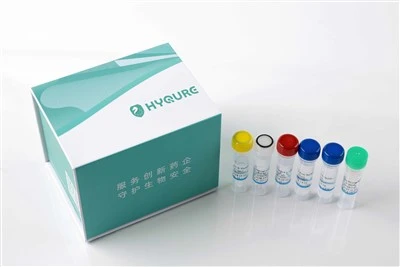
If you’re still not sure which kit is right for your operation, my team is here to help. We’ve worked with everyone from small craft breweries to large food processing plants, and we can walk you through your sample types, testing frequency, and regulatory needs to find the perfect fit. Don’t waste time or money on a kit that doesn’t work for you—reach out and let’s chat.
Host Cell Residual Protein Detection Kits References:
- FDA Bacterial Analytical Manual (BAM), Chapter 3: Escherichia coli, 2022
- ISO 11133:2014, Microbiology of food and animal feed – Horizontal method for the enumeration of microorganisms
- Rapid Microbial Detection Technologies: A Review of Current Applications and Regulatory Considerations, Journal of Food Protection, 2021
- Smith, A. et al. Performance Comparison of Culture-Based and Molecular Rapid Kits for Detection of Listeria monocytogenes in Ready-to-Eat Foods, Journal of Food Science, 2020
HyQure Biotech Co., Ltd.
As a professional microbial detection kits enterprise in China and Switzerland, we rely on international compliance standards, leverages excellent quality and technical strength. If you have any enquiry about cooperation, please feel free to email us.
Address: Building 18, Lane 2777 East Jinxiu Road, Pudong New Area, Shanghai 2.Stücki Park Hochbergerstr. 60 I, 4057 Basel Switzerland
E-mail: service@hyqure.com
WebSite: https://www.hyqure.com/
